Beginner Muscle Gain Tips: Your Path to Real Results
Are you ready to transform your body and see real muscle gain? As a beginner, it’s easy to get overwhelmed with all the conflicting fitness advice online. This guide cuts through the noise, giving you proven muscle building and fat loss tips grounded in science and real-world results. Whether your goal is to lose fat, build muscle, or simply feel stronger, these beginner-friendly strategies will set you up for long-term success.
Building the Foundation: Setting Realistic Expectations
Before diving into the nuts and bolts, let’s talk about expectations. Effort, patience, and consistency are key in fitness. If you’re hoping to wake up shredded after two gym sessions, you’ll be disappointed. True body transformation—fat loss, muscle gain, or both—takes time, but every bit of progress is worth it.
- Most beginners can gain 1-2 pounds of muscle per month with smart training and nutrition.
- Fat loss of 1-2 pounds per week is a healthy, sustainable pace.
- Visible changes can appear in 8-12 weeks with consistent effort.
Commit to the process, not quick fixes, and your body will reward you.
Fat Loss vs. Muscle Gain Strategies: Which Comes First?
Many beginners wonder: should I lose fat or build muscle first? The good news is—with the right workout routine and nutrition, beginners (especially those with higher body fat) can often do both at once. This is known as recomposition.
- If you’re leaner (men <15% bodyfat, women <22%), focus on muscle gain (“bulking”).
- If you have more bodyfat, you can burn fat while building muscle through progressive resistance training and a slight calorie deficit.
- Either way, the most important thing is to start resistance training and paying attention to nutrition today.
Muscle building and fat loss aren’t mutually exclusive for beginners—real transformation happens when you attack both intelligently.
Workout Tips: Training for Maximum Muscle Growth
Many gym newbies worry about finding the “perfect workout”. The truth? The best workout plan is the one you can stick to—consistency always wins. Start with this foundational approach:
- Train 3–4x per week using full-body or upper/lower split routines. More isn’t always better!
- Focus on “compound” moves: Squats, presses, rows, deadlifts, pull-ups, push-ups. These exercises work multiple muscles at once for maximum results.
- Use the progressive overload principle: Aim to gradually increase the weight or reps over time—you have to challenge your muscles to force them to grow.
- Perfect your form before chasing heavy weights. Good technique = better results and fewer injuries.
- Rest 48 hours between working the same muscle group. Muscle grows when you recover!
Real Example:
Sarah started out lifting just an empty bar in the squat, deadlift, and bench. By adding a little weight each week and focusing on technique, she transformed her body and confidence in four months—without any fancy gym hacks.
Step-By-Step Workout Routine: Your First 4 Weeks
-
Pick three full-body workouts per week (e.g., Monday, Wednesday, Friday).
- Choose one squat or leg exercise (squat, lunge, leg press).
- One push movement (bench press or push-up).
- One pull movement (barbell row or assisted pull-up).
- Finish with 1–2 core or accessory exercises (plank, biceps, triceps).
- Aim for 3 sets of 8–12 reps per exercise.
- Each week, try to increase the weight or do one extra rep.
- Warm up before training and stretch after.
- Track your workouts and celebrate each progression!
Nutrition Advice for Muscle Gain and Fat Loss
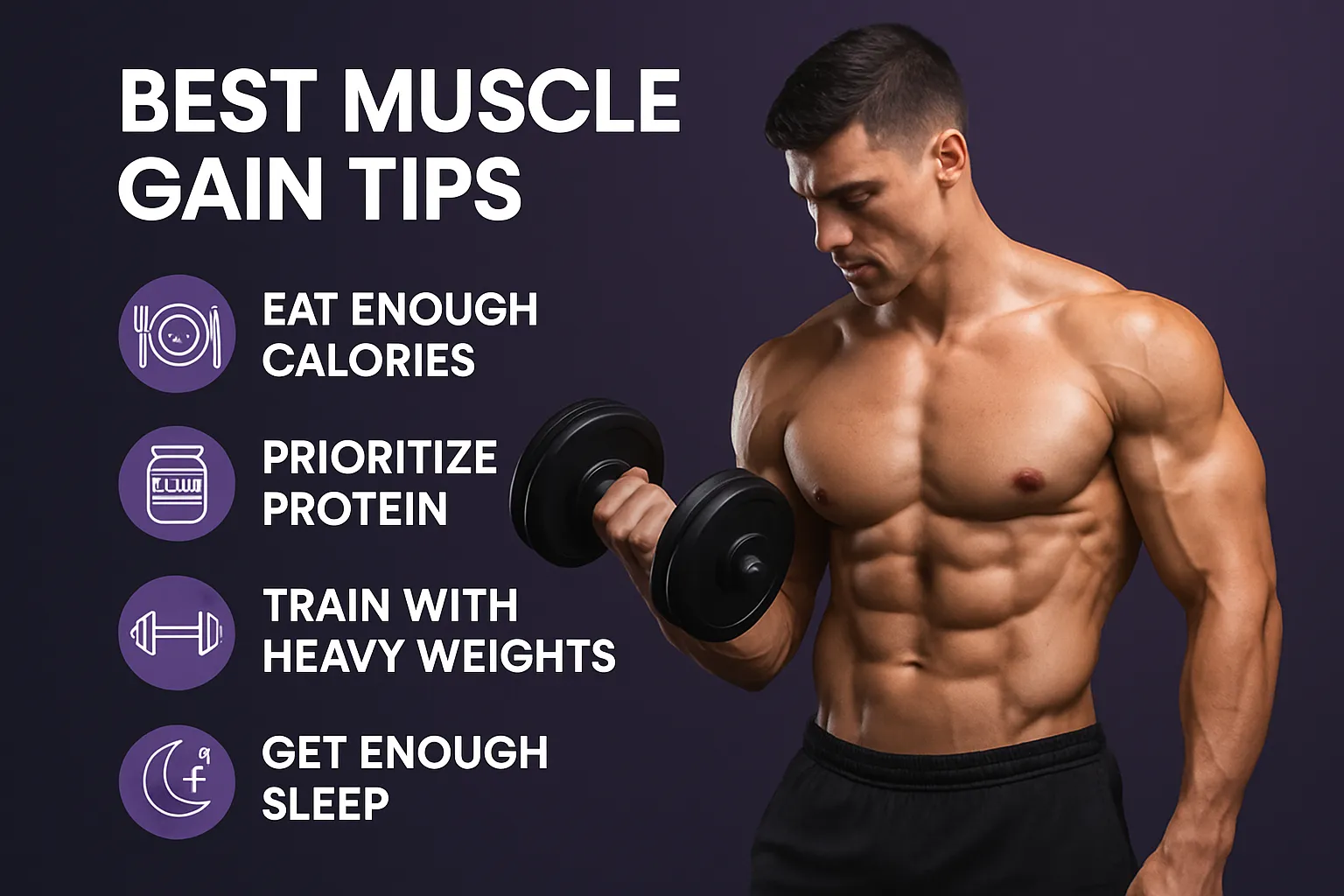
You’ve probably heard “you can’t out-train a bad diet.” It’s true: Nutrition is the foundation of real fitness progress—especially when it comes to fat loss and muscle gain.
-
Determine your calorie needs.
Use a free online calculator (search: “TDEE calculator”) to estimate how many calories you burn daily.- To gain muscle: Start with a 250–300 calorie surplus per day.
- To lose fat: Aim for a modest deficit of 300–500 calories per day.
-
Eat enough protein.
Target at least 0.7–1g protein per pound of body weight—protein builds and preserves muscle. - Fill the rest of your plate with: Whole grains, fruits, vegetables, healthy fats (avocado, nuts, olive oil).
- Stay hydrated and limit sugary drinks and processed foods.
- Don’t crash diet, skip meals, or try “magic” supplements.
Real Example:
Mike wanted to bulk up but kept skipping meals. Once he started meal prepping protein-rich lunches and snacks, he saw meaningful muscle definition for the very first time.
Step-By-Step Nutrition Guide for Beginners
- Estimate your calorie goal with a calculator.
- Plan three main meals with 20–40g protein each (chicken, fish, eggs, tofu, beans, Greek yogurt).
- Include vegetables or fruits at every meal.
- Prep snacks with protein, such as nuts, cottage cheese, boiled eggs, or jerky.
- Drink water throughout the day—hydrated muscles work better!
Common Mistakes to Avoid When Building Muscle
- Doing endless cardio and skipping weights (strength training is the best body transformation tool!)
- Obsessing over supplements—instead of food quality and consistency
- Jumping from workout to workout without a plan or progression
- Ignoring sleep—most repair and muscle growth happen overnight
- Checking the scale daily (muscle gain can mask fat loss and vice versa—use progress photos and clothes fit)
Stay focused on the basics, and you’ll build real strength and muscle.
Realistic Progress: Track and Celebrate Your Transformation
- Take progress photos every 2–4 weeks—small changes add up!
- Monitor measurements: arms, chest, waist, hips, thighs
- Record workout numbers (weight, reps, sets) in a notebook or app
- Pay attention to energy, mood, and confidence
- Remember: progress is not always linear—show up, stick to the plan, and your results will come
Every rep you complete and healthy meal you eat is moving you closer to your goals.
FAQ: Your Most Common Fitness and Muscle Building Questions Answered
-
How soon will I see muscle gain results?
Most beginners will notice fuller muscles and better definition after 4–6 weeks. Visible changes in body shape may take 8–12 weeks. Stay patient! -
Can I lose fat and gain muscle at the same time?
Yes—especially if you’re new to resistance training or returning after a break. Focus on strength training, a higher protein diet, and moderate calorie deficit. -
Do I need to take supplements?
Not at all. Protein powder and creatine can help if your diet is lacking, but food quality, training effort, and consistency matter most. -
How much cardio should I do?
2–3 sessions of 20–30 minutes per week is plenty for heart health. Prioritize strength training for body transformation. -
What if I feel sore or tired?
Some soreness is normal, but persistent aches or exhaustion signal you need more rest, sleep, or adjustment in training intensity.
Takeaway: Start Your Fitness Transformation Today!
Real muscle gain and body transformation don’t require drastic measures or quick fixes. Stick to the basics: consistent resistance workouts, smart nutrition, and plenty of rest. Track your progress and celebrate every improvement. Whether you’re aiming for fat loss, muscle gain, or both, these strategies will steer you towards the fitter, stronger, and more confident version of yourself.
Remember, every day is a new chance to become your best. Lace up, fuel your body, and get moving—the muscle you build today is the strength you’ll carry tomorrow.